


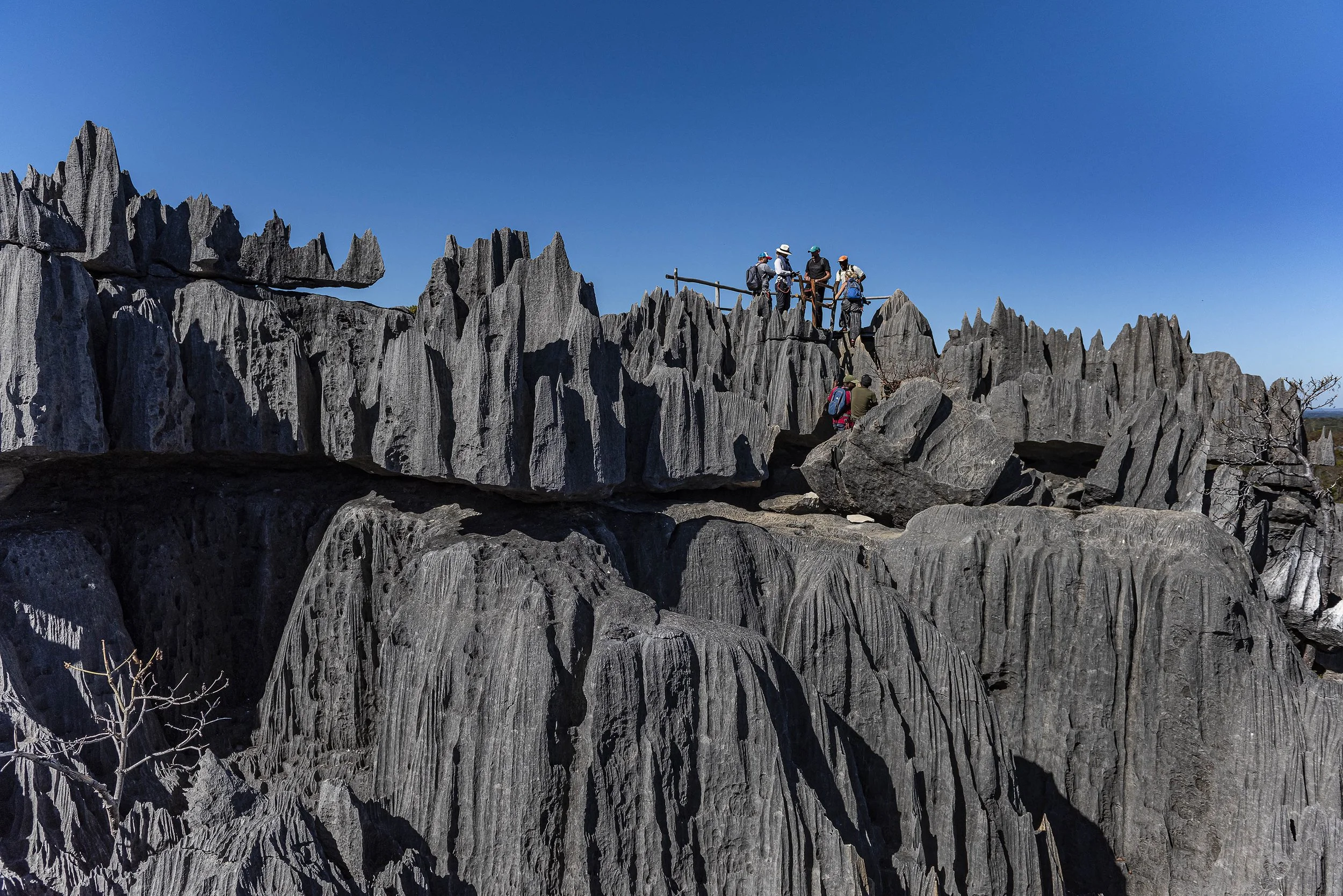


Salama, welcome to Madagascar!
This otherworldly island in the Indian Ocean is larger than France and boasts extraordinary biodiversity, with around 80% of its species found nowhere else on Earth. Shaped by thousands of years of remarkable human history, it is a vibrant cultural crossroads where Asian, African, and European influences converge.
Extraordinary creatures such as the fossa and the elusive aye-aye inhabit its forests, and Madagascar is home to more than 100 species of lemur, alongside a dazzling array of chameleons, frogs, baobabs, and endemic birdlife. The result is a destination unlike any other—an essential journey for wildlife enthusiasts and intrepid explorers alike.
You can immerse yourself in the more developed northwest of the island or venture into Madagascar’s wilder, more remote corners. Travel here is not always easy, but it is deeply rewarding and full of adventure. Some destinations are reached by small aircraft, while others require long overland journeys on rough roads—experiences best suited to the intrepid traveller.
For the ecologist it is a dream landscape, for honeymooners a romantic escape, and for adventurers a destination that delivers a genuine thrill of discovery.
Having travelled quite extensively across the island, I would say you need a minimum of 7–10 days to gain a meaningful overview of what Madagascar has to offer. I was once commissioned to write a detailed travel document on the country, and my conclusion was that it would take roughly six weeks to explore the island properly and experience most of its major habitats. For anyone truly interested in understanding Madagascar’s extraordinary biodiversity, I would recommend visiting two or three times rather than trying to see everything in one trip.
While it is possible to add Madagascar onto a mainland African safari, I strongly recommend experiencing it as a destination in its own right.
When to go:
May - November is recommended as Jan-March is cyclone season and make travel impossible. From June to September its relatively dry, especially on the west and from October - December it gets very hot up until the rains arrive.


Explore ‘my’ Africa
Click on the country flag


